

Resource
CLAT Syllabus 2027/2028: Latest & Detailed
CLAT Syllabus 2027/2028: Latest & Detailed Section-Wise Breakdown
7 min read
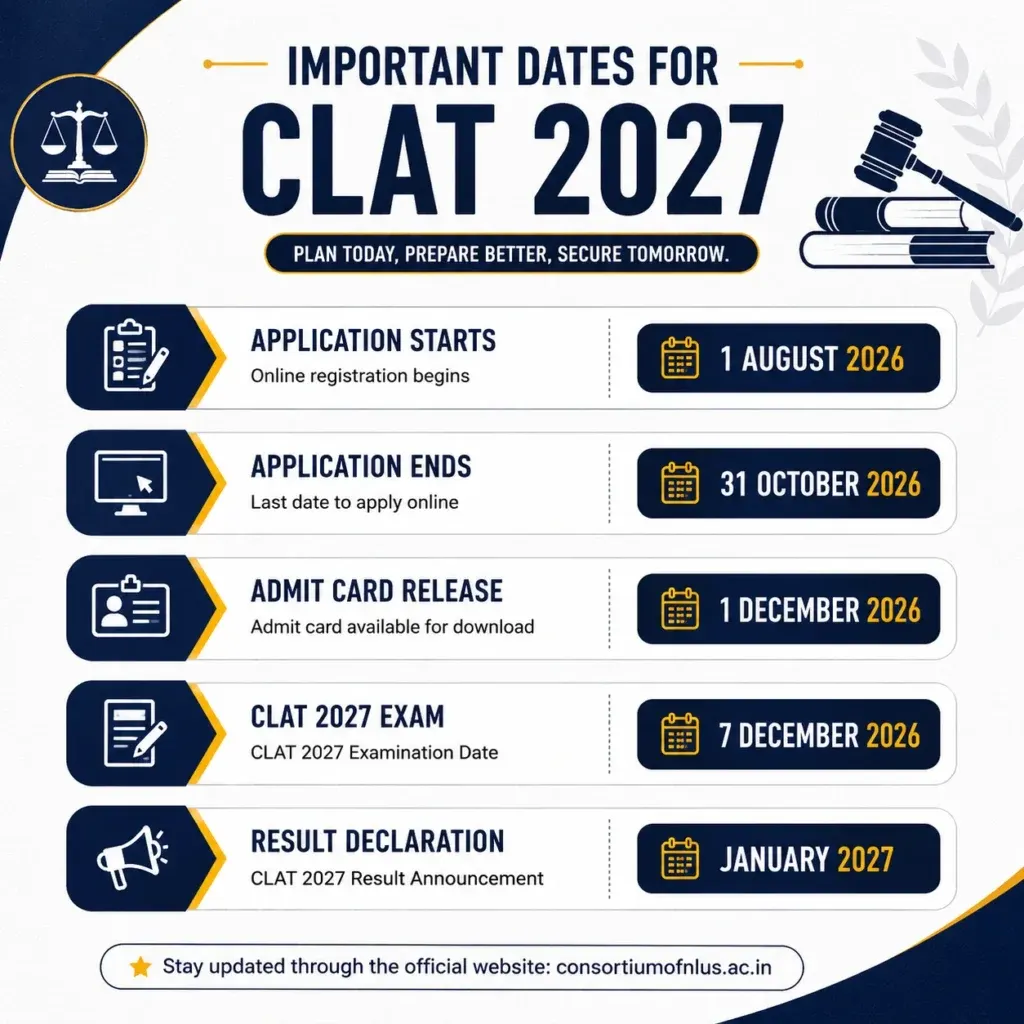
Every year, lakhs of students appear for CLAT, but only a handful make it into the top 10. What separates them from the rest isn’t luck — it’s a disciplined, well-structured approach sustained over months. If you’re serious about a top 10 rank, here’s a strategy that actually works.
A top 10 rank isn’t about “studying hard.” It’s about precision. At that level, the difference between rank 5 and rank 50 often comes down to 2-3 marks. This means:How to Crack a Top 10 Rank in CLAT
Your goal shifts from “clearing the exam” to “minimizing loss” — every avoidable error costs you rank, not just marks.
CLAT has five sections: English, Current Affairs (including GK), Legal Reasoning, Logical Reasoning, and Quantitative Techniques. Top rankers don’t have weak sections — they have a plan for each:
English Language Read editorials daily (The Hindu, Indian Express) instead of just novels. Focus on inference-based questions, vocabulary in context, and passage-based critical reasoning — not isolated grammar drills.
Current Affairs & GK This section rewards consistency, not cramming. Follow a monthly current affairs magazine and revise it weekly. Static GK (Constitution, sports, awards) should be revised on a rolling basis, not left for the last month.
Legal Reasoning This is the highest-weightage section and the biggest differentiator at the top. Master the principle-application format. Read landmark judgments in simplified form, and practice applying legal principles to unfamiliar fact patterns — CLAT increasingly tests reasoning over memorized law.
Logical Reasoning Focus on critical reasoning (assumptions, conclusions, strengthening/weakening arguments) rather than just puzzles. This section is scoring if your logic is clean.
Quantitative Techniques Keep this section simple — data interpretation, basic arithmetic, percentages. Don’t over-invest time here; it has the least weightage, so aim for accuracy over volume.

Top rankers typically attempt 60-100+ full-length mocks before the exam. But volume alone won’t get you there — it’s the analysis that matters:CLAT Legal Reasoning: Complete Guide & Tricks for Beginners 2026
CLAT gives you very little time per question. Top scorers follow a rough sequence like:
Practicing this rhythm in mocks is what makes it automatic on exam day.CLAT 2025 – CALENDAR

In the last 4-6 weeks, top rankers largely stop consuming new material and shift to:
Cramming new legal principles or current affairs in the last week usually backfires — it creates confusion rather than confidence.
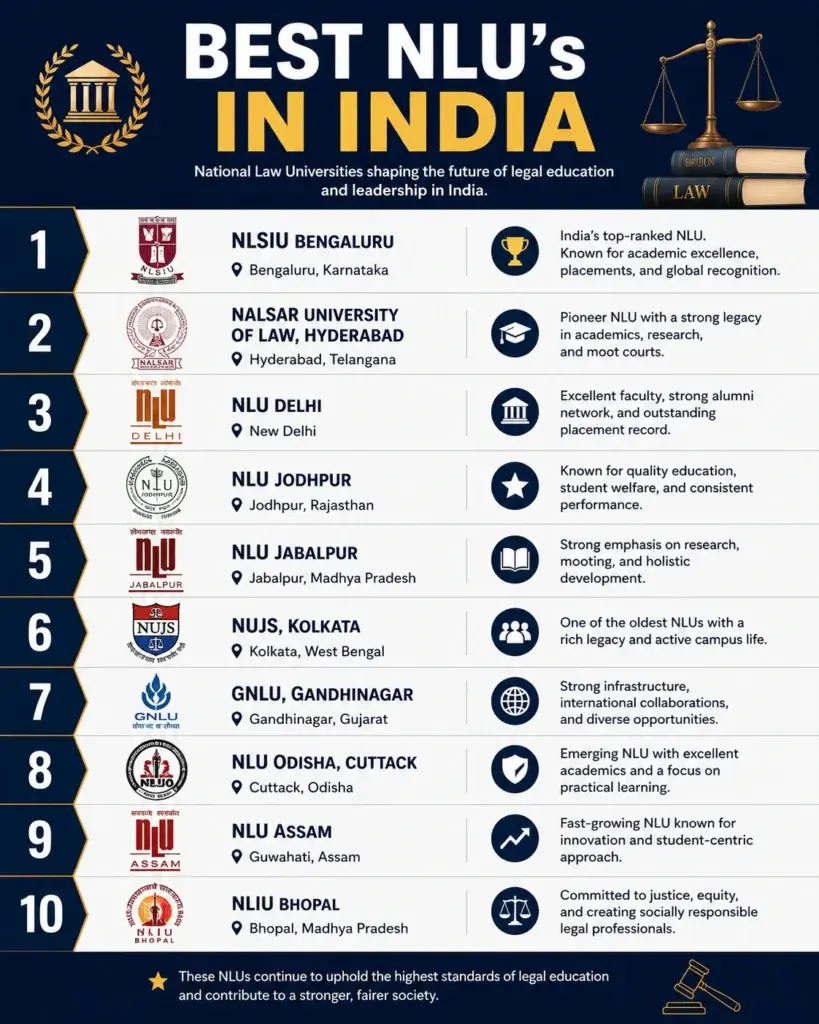
This part is underrated but critical. A top 10 rank requires 6-12 months of sustained focus, and burnout derails more aspirants than lack of intelligence does.
A top 10 CLAT rank is built on consistency, error elimination, and disciplined revision — not last-minute brilliance. Treat every mock as a diagnostic tool, master Legal Reasoning as your differentiator, and protect your daily routine over the long haul. Aspirants who execute this steadily, without dramatic highs and lows, are the ones who consistently show up in the top ranks.
Every year, lakhs of students across India sit for the Common Law Admission Test (CLAT), all dreaming of a seat at NLSIU Bangalore, NALSAR Hyderabad, or one of the other National Law Universities. Out of these lakhs, only one person becomes All India Rank 1. It sounds like an impossible feat — a needle in a haystack of ambition. But here’s the truth that toppers rarely say out loud: Rank 1 isn’t about being a genius. It’s about being consistent, strategic, and disciplined for a sustained period of time. If you understand the exam, respect the process, and execute a smart plan, Rank 1 stops looking like magic and starts looking like math.
This article breaks down exactly what it takes — mentally, academically, and strategically — to put yourself in contention for the top rank in CLAT.
The biggest mistake most aspirants make is treating CLAT like a memory test. It isn’t. Since the shift to the new pattern, CLAT has become a comprehension-based exam. Every section — English, Current Affairs, Legal Reasoning, Logical Reasoning, and Quantitative Techniques — is passage-based. You’re not tested on how much you know; you’re tested on how well you can read, understand, and apply information under time pressure.
This changes everything about how you should prepare. Rank 1 aspirants don’t just “study law” or “mug up GK.” They train themselves to become fast, accurate readers who can extract the right answer from a 250-word passage in under 90 seconds. If you internalize this one shift in thinking early, you’re already ahead of 90% of the competition who are still solving CLAT like it’s a 2018 paper.
If there’s one single habit that separates toppers from the rest, it’s reading. Not skimming, not scrolling — actual, focused reading of long-form content: editorials, opinion pieces, legal columns, and quality journalism.
Spend 30–45 minutes daily reading from sources like The Hindu, Indian Express editorials, or LiveLaw for legal updates. Don’t just read passively. Ask yourself:
This habit does double duty. It builds your Current Affairs base organically (instead of last-minute cramming), and it trains the exact comprehension muscle CLAT tests in every single section, including Legal Reasoning and Logical Reasoning.
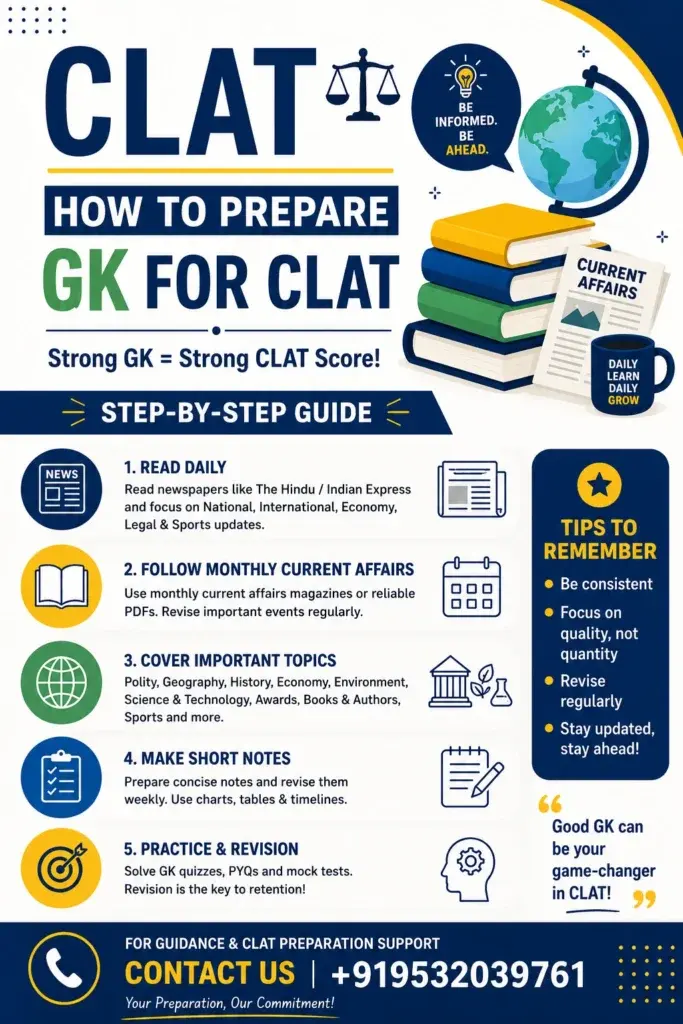
This section rewards speed-reading and inference skills. Practice identifying:
Toppers usually finish this section fastest because they’ve trained themselves to not re-read passages. Read once, carefully; answer once, confidently.
Since this section is passage-based too, you need both static GK and current events knowledge. Build a monthly revision system: compile important national and international news, legal developments, sports, awards, and government schemes into concise notes. Revise these monthly instead of relying on a single crash course close to the exam. Rank 1 candidates typically have 10-12 months of consistent, cumulative revision behind them — not four weeks of panic.
This is the heart of CLAT and the section that most differentiates top rankers. You don’t need to know actual law — you need to apply a given legal principle to a new fact scenario. The skill here is precise, literal reading. Don’t bring your own sense of justice or morality into the answer. Apply the principle exactly as stated, even if the outcome feels “unfair” to you personally.
Practice at least 15-20 legal reasoning passages a week from varied topics: torts, contracts, criminal law, constitutional law. The more fact patterns you expose yourself to, the faster your brain recognizes structures under exam pressure.
This section tests critical reasoning: assumptions, inferences, arguments, critical analysis of a passage, and sometimes basic puzzles or analogies embedded in passage form. The key skill is separating what is explicitly stated from what is merely implied. Toppers train themselves to never assume anything the passage doesn’t clearly support.
This is the smallest section but often the most feared. The good news: the math itself is class 10 level — percentages, ratios, averages, basic data interpretation. The challenge is extracting numerical data buried inside a passage or graph. Practice regularly so the arithmetic becomes automatic, freeing up mental energy for the actual data extraction and interpretation.
You cannot topper your way through CLAT by only reading theory or solving section-wise questions in isolation. The exam is fundamentally about time management across sections, and the only way to master that is by taking full-length mock tests under strict timed conditions.
A serious Rank 1 aspirant typically takes 60-100+ full-length mocks over their preparation journey — not just to score, but to review. The real learning happens in the post-mock analysis:
Keep an error log. Toppers almost universally maintain some version of this — a running document of every mistake, categorized by type, revisited weekly. This transforms mock tests from a scoring exercise into a genuine feedback loop that sharpens your weak areas systematically.
CLAT gives you 120 minutes for 120 questions — roughly one minute per question, but with five sections of varying length and difficulty, you need a battle plan, not just a stopwatch.
Rank 1 candidates typically develop a personalized sequencing strategy: they decide in advance which section they’ll attempt first (usually their strongest), how many minutes they’ll allocate to each section, and a rule for skipping tough questions rather than getting stuck. A useful rule of thumb: if a question isn’t yielding an answer within 60-75 seconds, mark it and move on. Return only if time permits at the end.
Precision matters more than volume in CLAT because of negative marking. Attempting 110 questions with a 60% accuracy rate will likely rank you lower than someone who attempts 95 questions with 90% accuracy. Rank 1 isn’t about answering the most questions — it’s about maximizing correct answers relative to attempts.
There’s a seductive myth that toppers pull all-nighters or cram sixteen-hour days in the final months. In reality, most Rank 1 holders describe a fairly consistent, sustainable daily routine maintained over 10-18 months: 4-6 focused hours of preparation daily, six days a week, with one day for rest or lighter revision.
Burnout is the single biggest derailment risk in CLAT prep. A student who studies 10 hours a day for two months and burns out will almost always underperform a student who studies 5 focused hours a day for ten months. Build a routine you can sustain, not one you’ll abandon by week three.
CLAT is as much a psychological exam as an academic one. Exam-day nerves derail more good candidates than actual lack of preparation. Rank 1 aspirants typically practice under simulated exam conditions repeatedly — same time of day, same duration, minimal distractions — so that the actual exam day feels familiar rather than intimidating.
Equally important is developing the ability to let go of a bad question or a rough start to a section. One tough passage doesn’t define your paper. Toppers train themselves to compartmentalize: solve, move on, don’t dwell.
It’s tempting to copy a previous Rank 1 holder’s exact schedule, book list, or notes. Resist this. Their system worked because it matched their strengths, reading speed, and starting point — not because it’s universally optimal. Use topper interviews and strategies as inspiration and a starting framework, then adapt ruthlessly based on your own mock test data and error patterns. Your path to Rank 1 will look different from anyone else’s, and that’s exactly how it should be.
Rank 1 in CLAT isn’t reserved for some rare breed of genius. It’s the outcome of a well-designed system: a genuine reading habit, section-wise mastery built through deliberate practice, rigorous and honest mock test analysis, disciplined time management, and the mental resilience to stay consistent over many months without burning out.
If you build these elements one at a time, starting today, Rank 1 stops being a distant fantasy and becomes a realistic, achievable target — not because the exam is easy, but because you’ve made your preparation strategic enough to make it look easy.
Good luck with your preparation — consistency beats intensity every single time.
CLAT Syllabus 2027/2028: Latest & Detailed Section-Wise Breakdown
CLAT 2028 Batch for Droppers: Why CLAT IQ Is the Right Choice

AILET Complete Preparation Strategy: A Holistic Guide to Cracking NLU Delhi's Entrance Exam